


Domestic Hydro Turbine
FINAL DESIGN OF HYDRO TURBINE ATTACHED TO GENERATOR
Problem
Those with ample access to running water have an incredible amount of potential hydroelectric energy that is presently being squandered. Hydroelectric energy is far cleaner than conventional energy production methods and is renewable, unlike most other forms of energy used by buildings. The goal of the project was to transition consumers to a more sustainable form of electricity readily available within there facilities. Other companies had tried to implement the idea of hydro turbine within pipes for larger purposes, however the return on investments had found the projects to be unsuccessful. Therefore, my team of four tackled the question of feasibility in a smaller, more domestic scale.
Action
We began the project by studying past attempts of the project and recognizing constraints.
Fits in generic house pipe
Does not contaminate water
Does not affect flow of water
Has a short return on investment
Once identified, we began to generate turbine designs on CAD and Solid Work programs

Turbine Concept 1:
INITIAL DESIGN OF TURBINE

Final Turbine Concept
TURBINE DESIGN GENERATED IN AUTOCAD
Action
We developed a final design of the turbine by using simulation software as certain mathematical formulas including Reynolds Number. As a result we were able resin 3D print our turbine and begin to assemble the final product to the generator we purchased.
Through the duration of the assembly we ran into several concern which were able to eventually overcome.
Because household pipes are tiny compared to large pipes that supply towns and cities, the scale could pose an installation issue
Reduction of the total amount of power generated by each turbine compared to larger scale.
Creating a robust enough design where maintenance will not be an issue.
Testing the efficiency and efficacy of our designs.
Energy storage/transference
Once assembly was completed, we were able to design a data collection method by connecting the generator to Arduino and design a code to read voltage generated.
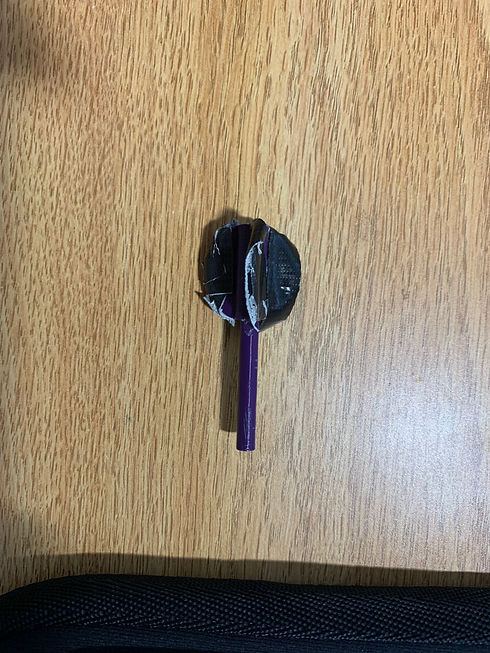
3D Printed Turbine
RESIN PRINTED

PVC Piping
USED TO SIMULATE HOUSE PIPING

Arduino Setup
USED FOR RECOVERING FINAL VOLTAGE PRODUCED
Result
Despite the complications the group encountered regarding the accurate simulation of water pressure within a house pipe, we have cause to believe that, under circumstances of similar water pressure, our device will work exactly as desired.
When removed from the pipe and placed directly under the sink, the turbine was allowed to freely interact with the water, which produced fairly consistent data (around 5 volts). When the turbine is placed inside of the pipe, however, water pressure falls as the pressure of the water exiting the faucet is higher than the water pressure inside the pipe. When comparing the data obtained from the turbine alone under the sink faucet against the turbine-pipe system, it is clear that the pipe hinders the accurate results we sought by decreasing the pressure of the water acting upon the turbine, thereby creating sporadic, less accurate data.
Overall, we believe we accomplished our project goals. The device we created was cheap yet practical and functions to generate clean energy from a renewable source. We believe that by commercializing and producing the device on a large scale, renewable energy can become both more accessible to the consumer as well as individually manageable. Additionally, the device significantly reduces the waste of potential hydroelectric energy experienced daily.

Final Assembly
PIPE AND GENERATOR WERE MENDED TOGETHER

Testing of Entire Sytem
PIPE AND GENERATOR WERE MENDED TOGETHER